Design Strategy

The End of Commodity Management & the Rise of the Sovereign Brand

Building a business on the "rented land" of a third-party marketplace is a precarious strategy for a luxury operator. Achieving brand sovereignty—a state where your identity carries enough gravity to own the guest relationship directly—is the only way to shield your bottom line from platform volatility.

Words
Diana Donaldson
Published
February 2, 2026
credit Dominik

A significant divide is forming between property managers and hospitality brands.

For years, the standard model for many operators has been to function as inventory providers for major online travel agencies (OTAs). While these platforms offer a stream of traffic, they do so by creating a walled garden that intentionally commoditizes the operator. In this ecosystem, the platform owns the data, the guest relationship, and the ultimate authority over the transaction.

As marketplaces continue to prioritize their own corporate interests over the individual operator, the transition toward brand sovereignty has become essential for long-term business survival.

The Risk of Rented Land

The marketplace model is engineered to make the operator interchangeable. By standardizing listings and masking guest communication, platforms ensure that loyalty is tethered to their interface, not to the property or the firm managing it.

When a business resides entirely within these walled gardens, it remains vulnerable to the latest platform policy shifts—sudden algorithm changes, guest-centric refund mandates, or fee increases that erode margins without warning. Relying on a third party for the entirety of guest acquisition is not a growth strategy; it is a fundamental business risk. Sovereignty is the ability to attract, convert, and retain guests through the gravity of your own brand.

Owning the Relationship

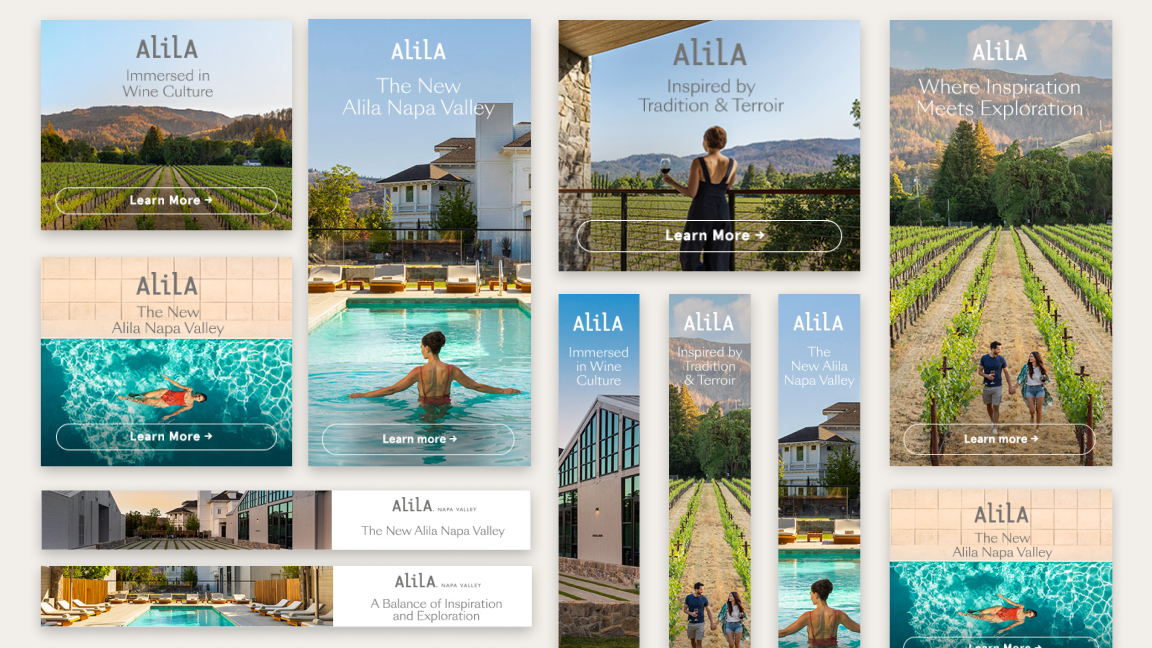
The world’s most successful hospitality groups, such as Hyatt or Alila, use OTAs strategically as a top-of-funnel tool, but they never allow them to become the primary custodian of the guest journey. These institutions understand that the true value of the enterprise lies in the direct connection.

In our work with these global icons, the objective was always to create a brand experience so distinct that the guest felt a sense of belonging to the institution itself. For a luxury management company, achieving this requires moving beyond mere logistics and adopting a visual language that signals primary authority. When a brand possesses institutional polish, the guest feels more secure booking through a private portal than through a mass-market search engine.
What’s a Rich Text element?

What’s a Rich Text element?

What’s a Rich Text element?

What’s a Rich Text element?

The rich text element allows you to create and format headings, paragraphs, blockquotes, images, and video all in one place instead of having to add and format them individually. Just double-click and easily create content.

The rich text element allows you to create and format headings, paragraphs, blockquotes, images, and video all in one place instead of having to add and format them individually. Just double-click and easily create content.

The rich text element allows you to create and format headings, paragraphs, blockquotes, images, and video all in one place instead of having to add and format them individually. Just double-click and easily create content.

  • bullet point
  • bullet point
  • bullet point
  1. bullet point
  2. bullet point
  3. bullet point
adsasdasd
The rich text element allows you to create and format headings, paragraphs, blockquotes, images, and video all in one place instead of having to add and format them individually. Just double-click and easily create content.

Editorial Gravity as a Strategic Defense

To break free from marketplace dependency, a brand must possess enough gravity to pull guests directly to its own digital flagship. This is where editorial design techniques serve as a strategic asset.

Marketplaces are inherently loud and cluttered, designed to drive quick, scarcity-based decisions. A sovereign brand replaces this friction with "visual quiet." By prioritizing high-fidelity, cinematic imagery and sophisticated, minimalist layouts, a brand signals a level of established luxury that platforms cannot replicate. This editorial approach transforms a website into a destination in its own right, justifying the guest's move away from the platform’s perceived safety net.

Protecting the Bottom Line via Data Sovereignty

A sovereign brand owns its data. When a guest books through an OTA, the platform captures the most valuable asset: the guest’s preferences, contact information, and long-term loyalty.

Establishing a direct booking engine supported by a strong visual identity allows for the capture of this data from the very first touchpoint. This enables a professionalized guest journey that continues long after the stay, turning a one-time booking into a lifetime relationship. In the luxury tier, where guest acquisition costs are high, the ability to bypass the marketplace and market directly to a loyal base is a vital lever for protecting profit margins.

Increasing Enterprise Value for Owners

The shift toward sovereignty is also a powerful tool for owner acquisition. High-net-worth property owners are increasingly wary of having their multi-million dollar assets commoditized. They recognize that a manager who is entirely dependent on an OTA is essentially a "commodity manager"—someone whose primary function is serving an algorithm.

Presenting a sovereign brand—one with its own audience and its own visual authority—positions a firm as a high-level partner. It demonstrates to the owner that their home is being placed within a prestigious hospitality institution that has the power to attract its own high-value guests. This increases the perceived value of the management service and establishes the firm as the clear choice for the region’s most significant estates.

The Future of Sovereign Hospitality

Commodity management is a race to the bottom. As platforms continue to tighten their grip on the guest journey, the operators who thrive will be those who have invested in their own brand identity.

Applying the visual and strategic standards used by the world’s leading hotel groups allows an operator to reclaim the guest relationship. By establishing a brand that possesses its own gravity, a business is no longer a row in a search result; it is a hospitality institution in its own right.

Key Takeaway: An honest evaluation of your "OTA Dependency Ratio" is required. If a single platform policy change would jeopardize your revenue, the move toward brand sovereignty is an urgent priority. Auditing your direct booking experience for the same institutional authority found in global hotel brands is the first step toward independence.

Other LE Blog Posts

View all

Let’s Talk About You.

Whether you’re looking for a creative team to lead your branding project or highly-skilled designers to level up your product design, we can help.

connect with us to start your project AT Hello@beindigo.com

Be Indigo helps forward-thinking companies resonate with their ideal customers at every touchpoint. Balancing elegant form and seamless function, we distill larger-than-life ideas into premium, comprehensive design solutions.

Learn more